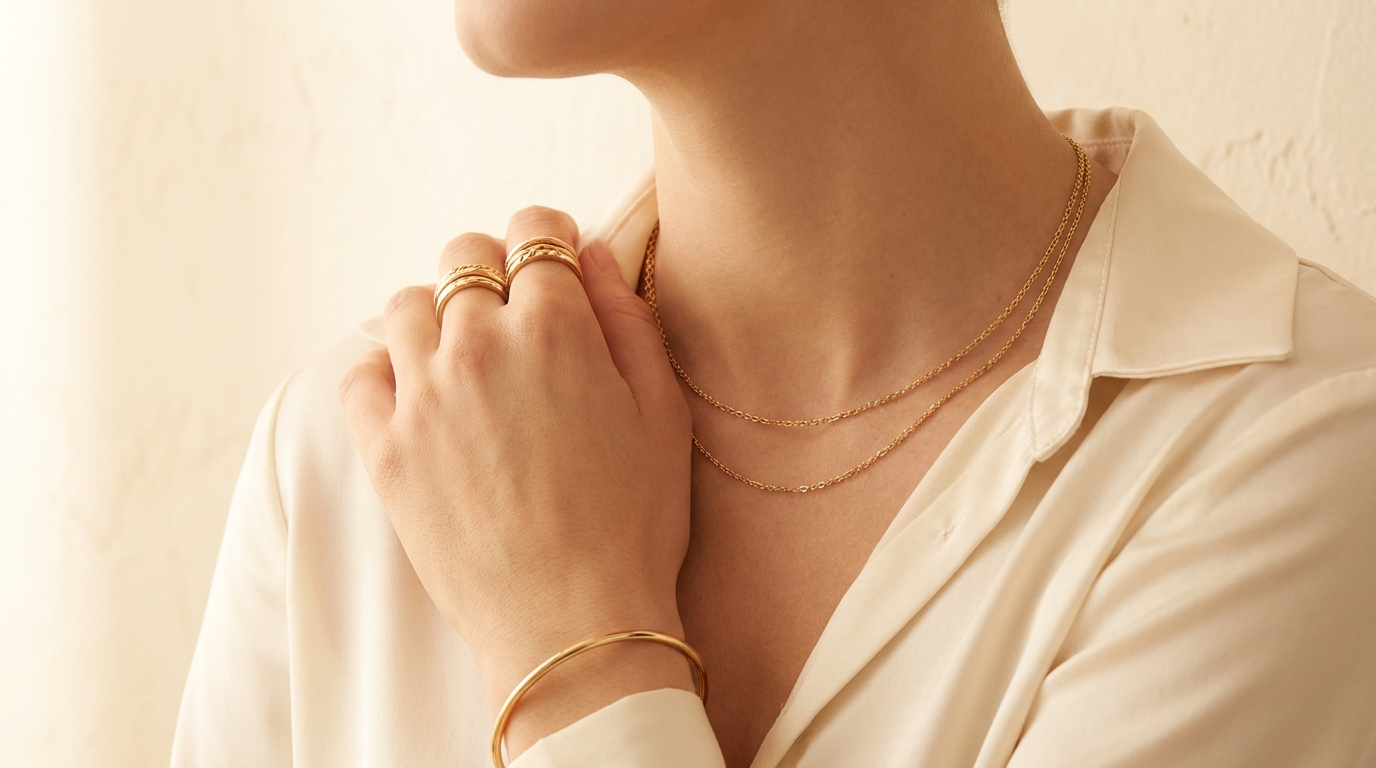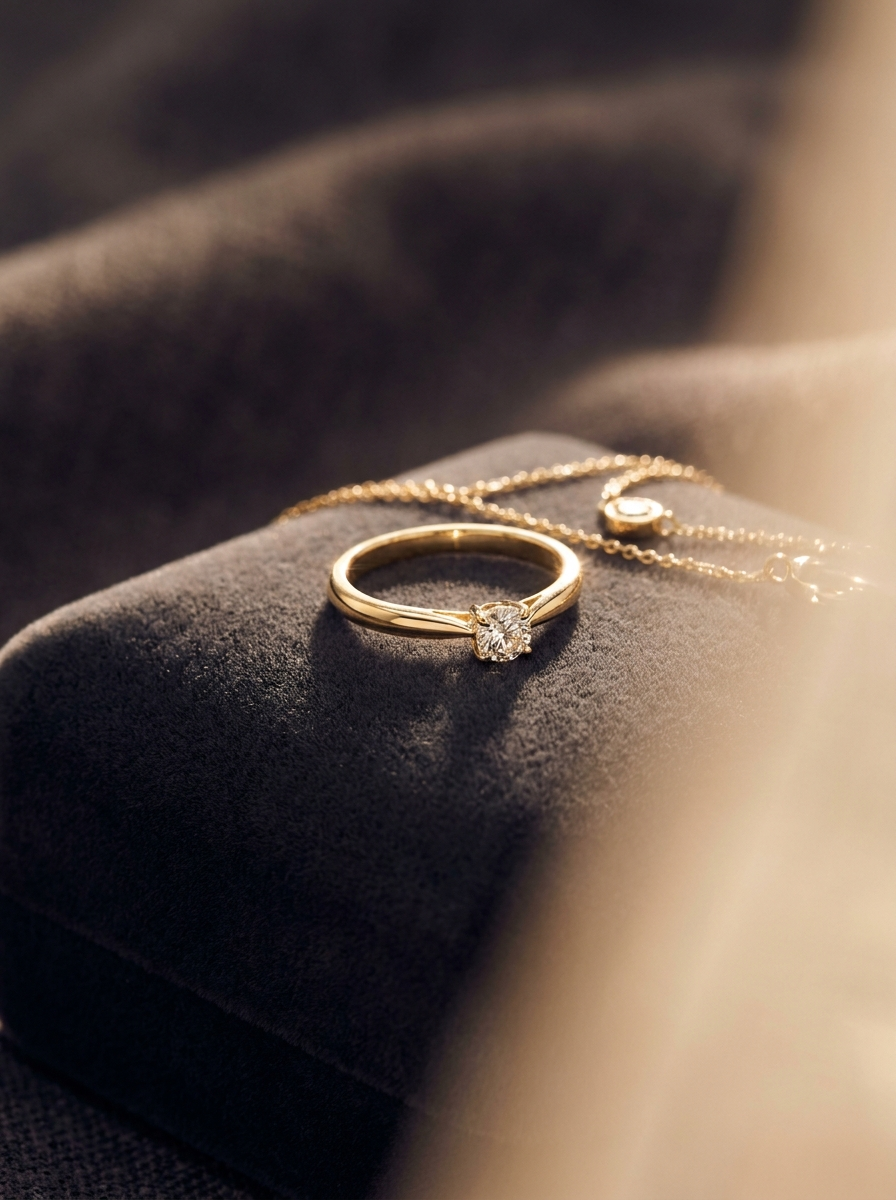
There is a moment every jewellery lover knows. The piece you loved arrives, you wear it every day, and within a few months the shine has dulled, the edges have worn pale, and a faint mark has appeared where the metal meets your skin. It is not bad luck, and it is not you. It is plating, and it was always going to happen.
Most jewellery sold as gold is not solid gold at all. Understanding the difference is the single most useful thing you can learn before you spend a penny, so let us make it simple.
What plated gold really is
Plated jewellery, sold as gold plated, vermeil or gold filled, is a base metal core (usually brass) wrapped in a microscopically thin layer of gold. That layer is measured in microns, often thinner than a strand of hair. It looks the part on day one. The trouble is that the gold is only ever a coating, and coatings wear off.
Daily wear, water, perfume and the natural oils on your skin all speed it up. Once the plating thins, the metal beneath begins to oxidise. That is the dull mark on your skin, and no amount of polishing brings the gold back, because there was very little gold there to begin with.
Solid gold has no surface to wear through. The colour is the metal, all the way to the core.
Why solid 18k is different
Solid gold is exactly that: gold mixed with a small amount of other metals for strength, then formed into the finished piece. There is no cheap core and no coating to lose. When we say 18k, we mean 18 parts gold out of 24, or 75 percent pure, which is why solid 18k carries the 750 hallmark stamped into every genuine piece.
Because the colour runs through the whole piece, there is nothing to flake and nothing to reveal. You can shower in it, swim in it and wash your hands a hundred times a day. Ten years on, a quick polish returns it to the way it looked the day it arrived.
What to look for before you buy
- A karat stamp: 9k, 14k or 18k, or the numbers 375, 585 or 750
- An independent hallmark, not just a maker claiming the metal is real
- A clear guarantee and return policy written down, not implied
- A brand that will state the exact gold content without hedging or vague wording
Aurelle in one line: every piece is solid 18k (750) recycled gold, nickel free, water safe and hallmarked, with a lifetime guarantee and a complimentary re-polish whenever it needs one.
Solid versus plated, side by side
| Aurelle solid 18k | Typical plated or vermeil | |
|---|---|---|
| How long the colour lasts | A lifetime, right to the core | Months, then it wears thin |
| Safe in water and the shower | Yes, wear it everywhere | No, water speeds the fade |
| Kind to sensitive skin | Nickel free 18k alloy | Brass can mark the skin |
| Can be re-polished for life | Yes, and we do it free | Polishing removes the plating |
| Holds real value to pass on | Genuine gold, an heirloom | Little to no lasting value |
Choose your gold, add a word that matters and see the price update. Every piece is hand engraved, gift boxed and guaranteed for life.
Choose your goldForever engraved on 18k yellow gold, single signet, 245 pounds
Shop this pieceFree engraving / Ships in 3 to 5 days / Lifetime guarantee
Is solid gold worth the difference?
On paper, plated looks cheaper. In practice you replace it, again and again, and each replacement costs money, time and a little disappointment. Buy one solid piece and the maths flips: a single price, worn for decades, with real gold value that stays with you.
There is also the part that does not fit on a spreadsheet. A solid gold piece becomes yours. It gathers the small marks of a life, it can be engraved with something that matters, and one day it can be handed on. Plating cannot do that. It was never built to last that long.
So the honest answer is yes, if you buy once and buy well. Choose solid, check the hallmark, and pick a maker who will stand behind it for life. Do that and the piece stops being a purchase and starts being a keepsake.