How adaptive noise cancelling actually works
Six microphones, 50,000 samples a second and a bit of clever maths. Here is what really happens inside your earbuds the moment you tap for quiet, and why the adaptive kind beats the fixed kind on a real commute.
Drag to feel it. Cobalt Pro adapts this up to 42 dB in real time as the room around you changes.
You step onto the train, the carriage roar closes in, and then you tap a bud once and it is gone. It feels like magic. It is not magic, it is physics, and once you understand the trick you can get far more out of it.
Every pair of earbuds that claims active noise cancelling is doing the same fundamental thing: listening to the noise around you and generating the exact opposite of it. The details are where cheap ANC and genuinely good ANC part ways, and the difference is not a spec on the box. It is whether the maths keeps up with a world that never sits still.
What noise actually is
Sound is a pressure wave moving through air. When a bus engine drones, it is pushing the air in a repeating pattern that your eardrum reads as a low, steady rumble. Draw that pattern on a screen and you get a wave: peaks where the air is compressed, troughs where it is thin.
Here is the useful part. If you could create a second wave that was a perfect mirror of the first, a peak for every trough and a trough for every peak, the two would meet in your ear canal and cancel out. Physicists call this destructive interference. Two real sounds add up to something close to silence. That is the whole idea behind ANC in a single sentence.

The trick: play the noise backwards
To build that mirror wave, the earbud first has to hear the noise. Cobalt Pro uses six microphones per pair for exactly this. Some face outward to sample the world before it reaches you. Others sit inside the ear canal, checking what actually made it past the seal. A tiny processor compares the two, works out the noise still leaking through, and generates an inverted copy through the same driver that plays your music.
The catch is speed. Sound travels fast, so the earbud has a vanishingly small window to hear a noise, invert it and play it back before the original reaches your eardrum. Cobalt Pro runs this loop tens of thousands of times a second. Miss the timing and the anti-noise arrives late, which does not cancel anything and can even make things worse.
Good noise cancelling is not about blasting silence at you. It is about being fast enough, and honest enough, to keep up with a room that is always changing.
Naomi Sato, Lead Acoustic EngineerWhy adaptive matters more than raw power
Older ANC is fixed. It cancels one profile of noise well, usually a steady low drone, and leaves everything else largely untouched. It works beautifully on a plane and poorly almost everywhere else, because real life is not a steady drone. Adaptive ANC measures the room many times a second and re-tunes the cancellation to match what is actually there, right now.
That is the difference you feel when the train pulls into a station and the noise shifts from engine rumble to squealing brakes to a platform announcement. Fixed ANC lurches. Adaptive ANC follows. Under the hood, Cobalt Pro is constantly juggling a handful of jobs at once:
- Feed-forward listening. Outward microphones catch noise before it reaches you, buying the processor time to build the mirror wave.
- Feed-back correction. In-ear microphones check the result and clean up whatever slipped through the seal.
- Adaptive filtering. The cancellation profile is re-tuned many times a second so it tracks the room instead of fighting one fixed assumption.
- Transparency on demand. One tap flips the same microphones the other way, letting the world back in so you can hear an announcement without pulling a bud out.
- Wind rejection. Gusts are detected and handled separately, so an open platform does not turn into a roar of static.
The seal does half the work
ANC can only cancel the noise it hears. Everything blocked by a good physical seal never has to be cancelled at all. If your quiet feels weak, the fix is almost always the right ear tip, not more processing. That is why Cobalt Pro ships with four tip sizes and a 60 second fit test.
What you will actually notice
Specs are easy to print and hard to feel. In day to day use, strong adaptive ANC shows up in three quiet ways. Your music sits at a lower, safer volume because you are no longer fighting the background. Calls get easier because the same microphone array that cancels noise also strips it out of your voice. And the fatigue that builds up on a long, loud day simply does not arrive, because your ears were not straining the whole time.
Hear the trick for yourself
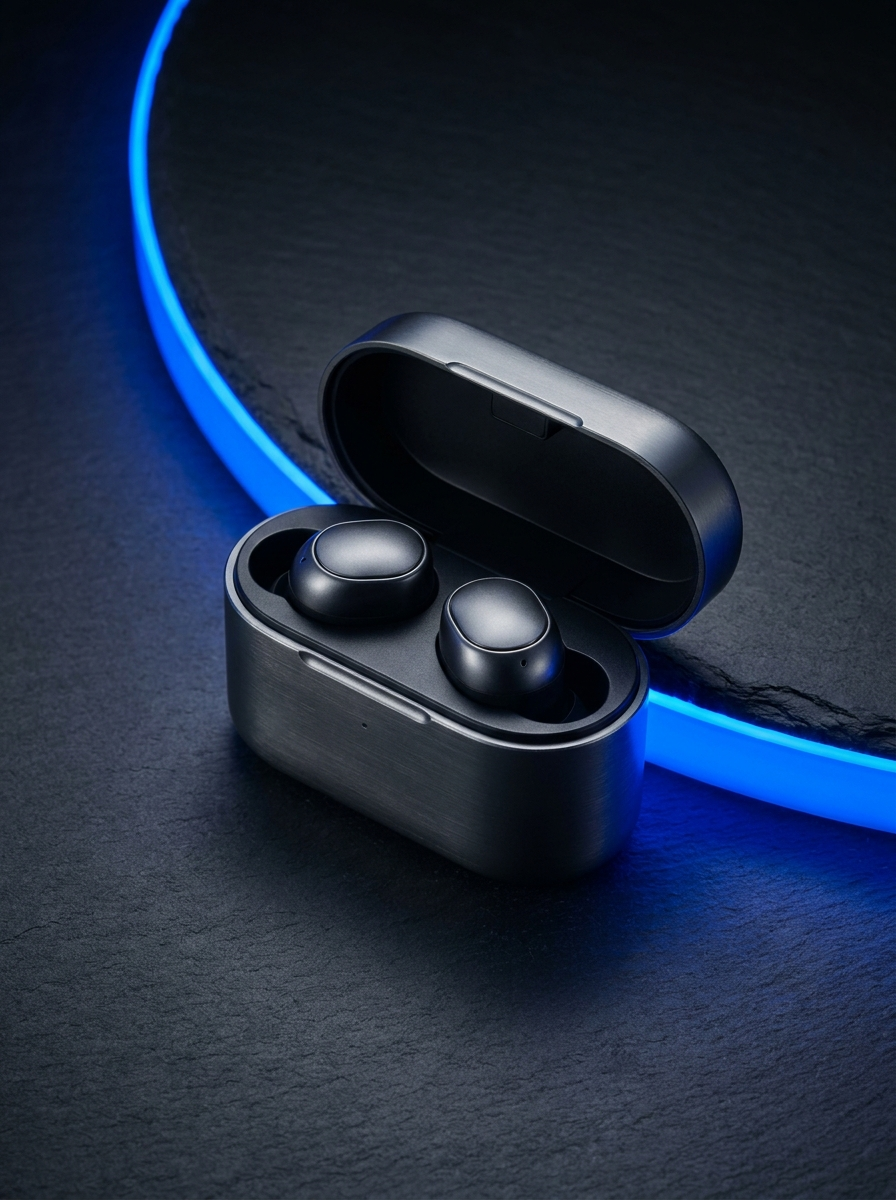
Cobalt Pro pairs adaptive ANC with 10mm graphene drivers and 38 hours of battery. Test it on your own commute, risk free for 45 days.
The limits worth knowing
No earbud cancels everything, and any brand that says otherwise is selling you a story. ANC is at its best on low, continuous sound: engines, fans, the general hum of a city. It does far less against sudden, sharp noises like a slammed door or a nearby voice, because those are too fast and too unpredictable to mirror in time. That is a limit of physics, not a fault in the buds, and it is exactly why the physical seal matters so much.
The honest takeaway is simple. Adaptive ANC will not wrap you in a soundproof booth. What it will do is lift the constant, draining layer of background noise off your day, so the music you chose is the loudest thing you hear. On a real commute, that is the difference that keeps owners coming back.
Try the quiet for 45 days.
Order today, wear Cobalt Pro through every commute, run and call. If it is not the best pair you have owned, send it back inside 45 days for a full refund, shipping included. The risk is entirely ours.